INSIGHTS
The Big Construction Diversity Challenge
Beyond good intentions: The real return of EDI in construction
For years, inclusion in the construction industry has been treated as the right thing to do. In 2025, it’s becoming the smart one.
In one of the UK's most operationally demanding industries, Equality, Diversity, and Inclusion (EDI) initiatives are often viewed as a moral commitment rather than a business imperative. But as the construction sector faces a deepening skills shortage, stubborn retention challenges, and mounting ESG pressures, EDI is now emerging as a foundation of long-term resilience - one that shapes performance, productivity, and workforce stability.
Conversation is now shifting from why EDI matters to how it delivers. Across the world, companies prioritising equitable recruitment, inclusive leadership, and diverse supply chains are already seeing measurable returns. From increased retention and engagement to even profitability, the business case for diversity is now widely accepted - and extends beyond social impact. And yet there's still limited discussion about what success looks like in UK construction - particularly for the smaller businesses operating on tighter margins.
This article explores both sides of that equation: firstly, the growing business case for EDI in the construction industry, and secondly, how companies of every size can embed inclusion as a measurable, results-driven strategy. In 2025, good intentions aren't enough. The businesses shaping the future of this industry will be innovative, adaptable, and inclusive.
What the data tells us
The construction industry currently faces a workforce crisis. It is projected to need an additional 239,000 workers by 2028 to meet demand, yet struggles with both attraction and retention. Against this backdrop, firms need a new strategy to not just fill roles, but build stable, high-performing teams. The answer may lie in an unexpected place: inclusion.
Cross-industry research consistently shows that Equality, Diversity and Inclusion is not just ethical, but economical. According to leading experts, diverse and inclusive workplaces significantly outperform their competitors and are characterised by financial stability. McKinsey's Diversity Matters Even More (2023) is the most comprehensive study to date, finding that companies prioritising both gender and ethnic diversity are more likely to achieve above-average profitability. The figures are as follows:
Executive teams in the top quartile for both gender and ethnic diversity are 39% more likely to outperform their peers
Teams in the top quartile for both gender and ethnic diversity are 9% more likely to achieve above-average financial performance
Companies in the bottom quartile for both gender and ethnic diversity are 66% less likely to outperform financially, up from 27% in 2020, indicating that a lack of diversity may be getting more expensive
These gains are strengthened when diversity is paired with inclusion. According to a 2019 study conducted by BetterUp (cited across leading authoritative bodies, such as Deloitte and Harvard Business Review), workplace belonging is a crucial driver for unlocking team performance. When employees feel they belong, job performance increases by 56%, turnover risk drops by 50%, and sick days fall by 75%. The impact of exclusion is equally striking, where even a single instance of micro-exclusion can reduce an individual's performance on a team project by 25%.
The commercial case for EDI is increasingly well-evidenced. Organisations that embed inclusion into their strategy build more stable workforces and achieve measurable gains in innovation, productivity, and profitability. For an industry like construction, operating on tight margins and growing talent pressure, EDI is becoming essential for staying competitive in 2025.
Moving beyond the data
Across the construction industry, forward-thinking firms are already translating these insights into action and sharing their progress through The Big Construction Diversity Challenge.
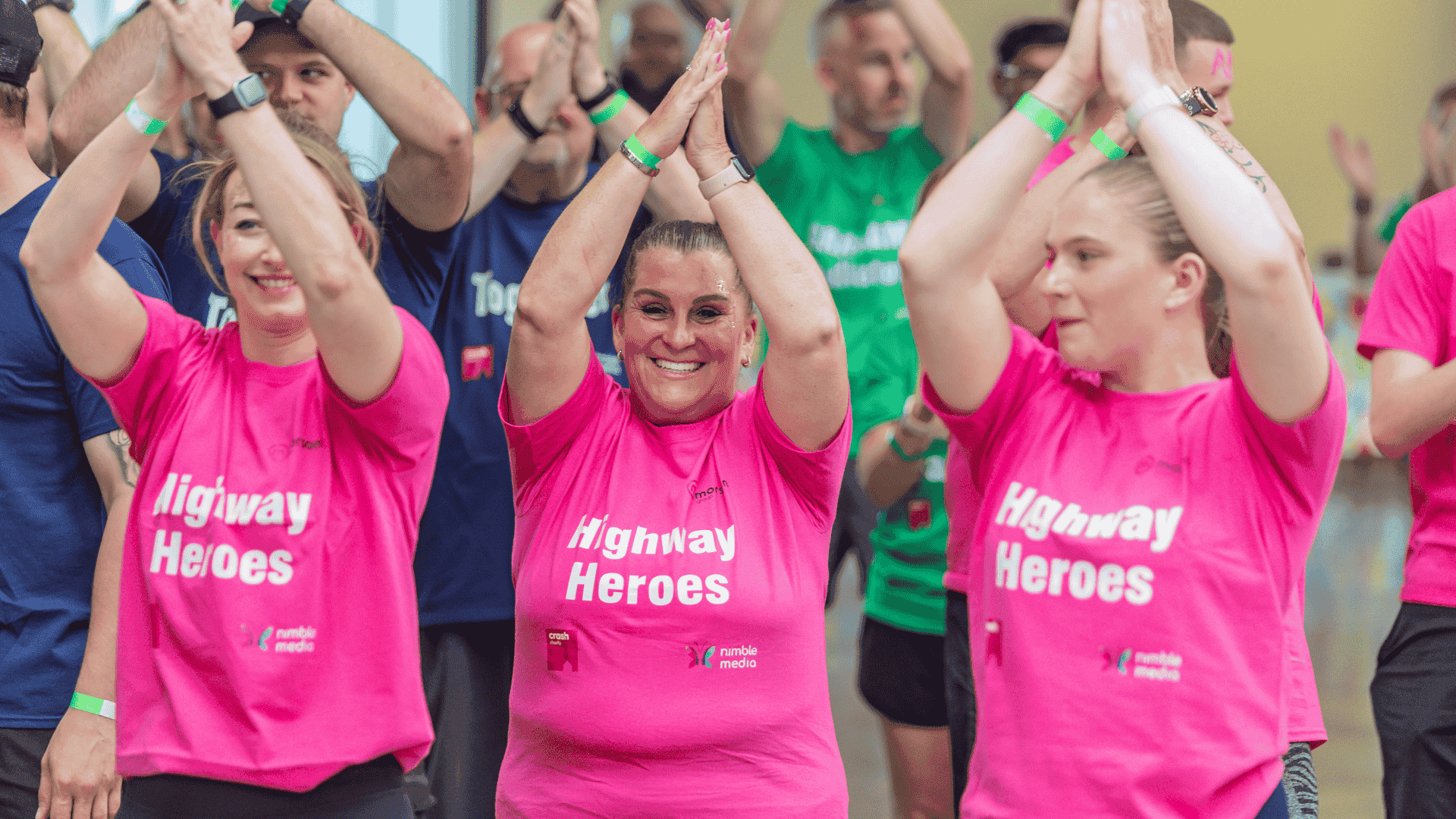
Run by Nimble Media Ltd, this annual event moves EDI from awareness to implementation, bringing together companies from every corner of construction to benchmark progress, celebrate success, and build further momentum.
BIG change starts from within.
Ready to see inclusion in action?

BIG wins: 3 ways inclusion can transform UK construction.
The commercial case for EDI is clear. But what does it mean for construction?
For the construction industry, where project outcomes depend on team cohesion, safety, and efficiency, these findings carry particular weight. Every challenge this sector currently faces (skills shortages, retention struggles, safety incidents) is rooted in its people. The research suggests that inclusive practice directly addresses these issues: stronger retention, better collaboration, fewer absences, and higher performance.
As one of the UK’s least diverse sectors, construction therefore has huge potential for measurable progress. When inclusion reduces stress, cuts costs, and improves wellbeing, it creates healthier teams and a more resilient industry.
Three areas stand out, and all three hit the bottom line: retention, well-being, and reputation. These aren't soft metrics. They're the difference between businesses that struggle to staff projects and those that build competitive advantage through their people.
The real profit in people
The construction industry’s early churn problem is one of its highest economic costs. High turnover disrupts teams, drains expertise, and replaces potential careers with short-term departures. A 2017 CITB survey found that 62% of UK construction employers saw early leavers as their main business concern, and with every departure costing thousands, the financial toll is clear.
Inclusive workplaces reverse that pattern. The CIPD's Inclusion at Work report (2024) shows that organisations with inclusive cultures experience 45% lower turnover. When people feel supported, they’re more invested in their teams and their projects. And in a sector where continuity and site knowledge directly affect safety, quality, and efficiency, that stability could pay off quickly.
Your business could be losing business.
When talent walks out the door, you don’t just lose people. You lose profit.
According to LodgeCourt Ltd, the average cost of hiring and training a new worker can amount to £25,181 by the time they’ve reached optimum productivity (typically 28 weeks in role).
This means for a firm employing 1,000 people, preventing just 10 early-leavers could save a quarter of a million pounds each year in direct replacement costs alone.
Multiply that across an industry already struggling with record churn, and the scale of lost value becomes clear.
These changes don't demand big budgets or new departments. They start with the basics: fair recruitment, mentoring, flexibility, and clear development paths. When people can picture a future where they belong, they build it. That's what turns retention from a vulnerability into a strength - for people and for business alike.
Stay informed! Follow us on social media to keep up to date with news and the latest article releases.
Winning through wellbeing
Tight deadlines, long hours, and high stakes continue to take a toll on wellbeing - and the data is sobering. A 2025 CIOB survey found that 94% of construction workers experienced significant stress in the past year, 83% experienced anxiety, and 60% experienced depression. Worse still, suicide rates remain three times higher than any other UK industry: a clear signal that something fundamental needs rebuilding.
According to a 2024 study commissioned by PBC Today, poor mental health led to 5.1 million lost workdays in one year, costing UK construction an estimated £1.2 billion in productivity. Figures like this expose the wider impact of unhealthy work practices. When people are exhausted, isolated, or unheard, projects suffer - and the industry takes a hit.
Addressing EDI is an investment in organisational health. Through inclusive practices such as peer networks, mental health training, and flexible working arrangements, businesses can transform their workplace culture from one of silent strain to one of safety and support. When people feel they belong, they're healthier - and so is your business.
Earning trust and opening doors
Another benefit of improving inclusion efforts is how your business shows up. In 2025, EDI is essential to internal operations but is also increasingly embedded in procurement decisions. Clients want partners who share their values. Talent wants to work somewhere it belongs. The firms that embed inclusion into their DNA will be the ones opening doors to better opportunities.
Talent waiting to be asked
The UK construction sector needs 239,000 new workers by 2028, yet continues to lose more people than it gains. The interest is there; it just isn’t being reached.
A 2024 Approach Personnel survey found that 66% of young women in the UK are open to, or actively considering, careers in the construction industr,y but structural barriers keep them out. Similarly, the 2023 Sustainability Tool survey found that ethnic minority applicants face a 90:1 application-to-hire ratio, compared with 28:1 for white applicants, making it approximately three times harder to secure construction roles.
The interest is there; what's missing is access. Widening recruitment channels, offering flexible working arrangements, and showcasing visible role models can unlock untapped talent pools quickly. Firms that take these steps fill critical roles more quickly, reduce recruitment costs, and build more resilient teams. The barrier isn't the pipeline. It's the door.
Credibility now earns work
In 2025, inclusion has moved from being an ethical choice to a client expectation. Procurement teams now assess social value and representation alongside technical ability. And it’s increasingly mandated by law.
From 1 October 2025, Procurement Policy Note (PPN) 002 makes social value mandatory across all central government procurements, with a minimum 10% weighting on evaluation scores. Among local authorities, many are already applying weightings of 20-30%. With around £400 billion of central government spend now tied to social value performance, EDI credentials are the new gateway to compete. Firms that can't demonstrate inclusive governance, fair labour practices, and measurable community impact risk being locked out before price or quality are even assessed.
Private-sector procurement is following suit. A 2024 BITC report found that 52% of procurement professionals in large businesses have targets to increase supply-chain diversity, and 70% publicly report progress through ESG frameworks. Firms unable to evidence inclusive governance and fair labour practices risk being excluded from entire markets before cost or quality are even considered.
Leading the industry forward.
The business case is certain: inclusion drives retention, strengthens wellbeing, and opens doors to work. But behind every percentage point and cost saving is something simple - people who feel valued stay, contribute, and thrive.
As a new next generation enters the workforce, values matter as much as pay. People want to work where they belong. Clients want partners who reflect the communities they serve. And even the market will now reward inclusion.
The firms leading on EDI today aren't choosing between profit and principle - they're proving they're the same thing. Inclusion isn't just good business. It's the foundation of it.
Starting small but thinking BIG: Where to start.
Inclusion doesn’t have to be complicated.
For many firms, embedding inclusion can feel like a large-scale transformation - demanding new teams, significant budgets, or complex strategies. In reality, meaningful culture change often starts small: through consistent, everyday actions that make people feel respected, supported, and valued.
One of the most powerful ways you can make change is by changing current dialogue. This might mean site managers taking time to hear worries from apprentices, or experienced tradespeople remaining open to different approaches. It could involve recognising that when someone expresses discomfort with workplace interactions, that experience deserves consideration rather than dismissal.
Whatever improvement looks like for your site, The Big Construction Diversity Challenge is an initiative designed to make those conversations easier for businesses, and to approach diversity and inclusion with commitment from its leaders. The event invites organisations of all sizes to benchmark their inclusion journey, share learning, and collaborate with peers across the sector. Whether you’re an SME building stronger teams or a major contractor enhancing an existing strategy, we aim to help you lead change with actionable, realistic, but genuine terms.